

Top Questions to Ask a Methadone Clinic in Ohio
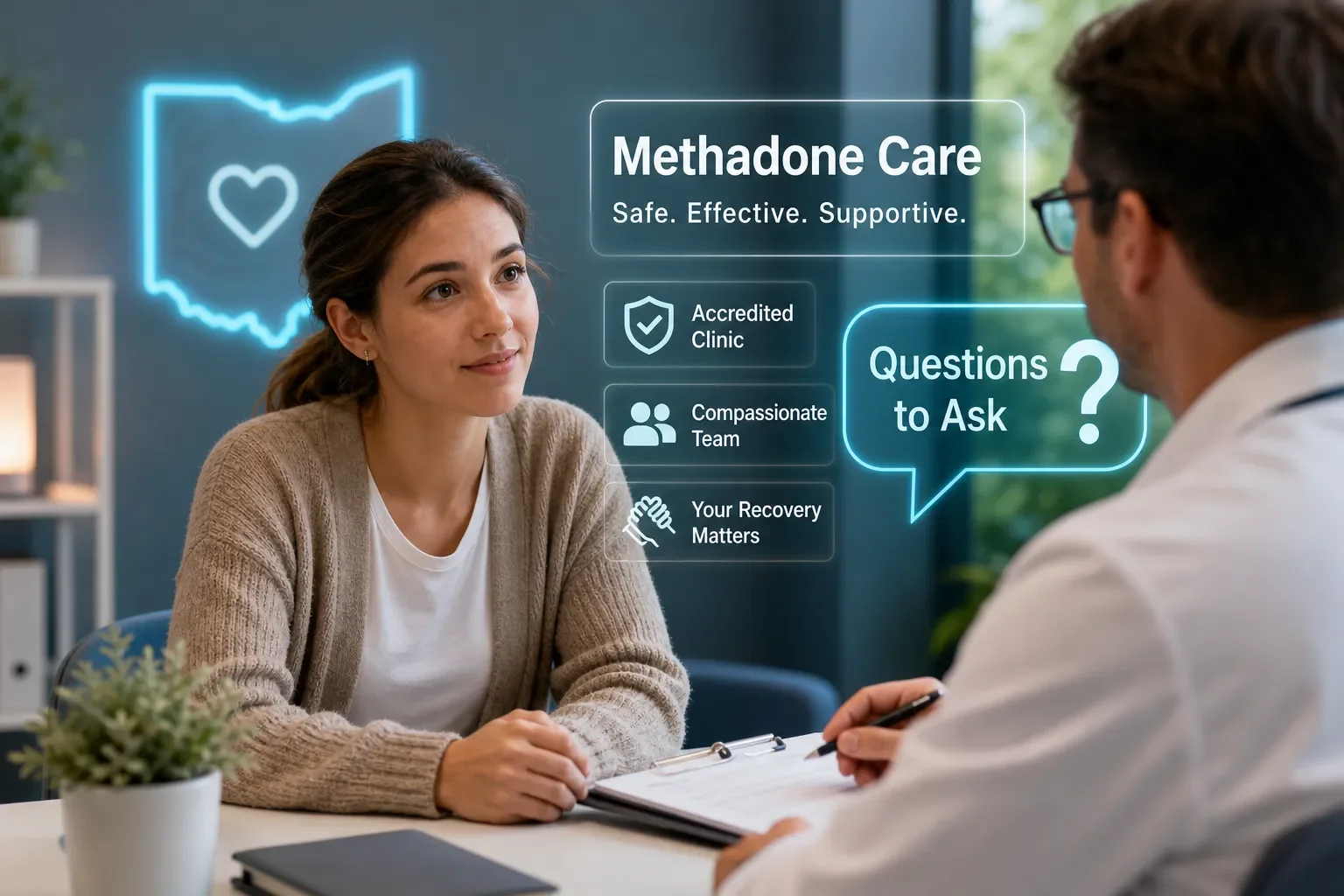
You've made the decision. That part is done, and it took more courage than most people will ever understand. Now you're staring at a list of clinics, maybe scrolling through a search results page at midnight, and you have no idea what separates one program from another. That moment, right there, is where a lot of people freeze. This guide is built to get you unstuck.
If you're searching for a methadone clinic Ohio residents can trust, start by knowing what questions to ask before your first appointment. Choosing a methadone clinic isn't like picking a pharmacy. It's a decision that will shape your daily life, your recovery, and whether you feel supported or just processed. Not all certified Ohio opioid treatment programs operate the same way, and the difference between a clinic that's truly built to help you and one that's built to fill chairs often shows up in how staff answer your questions.
At Amazing Grace Center in Portsmouth, Ohio, those questions are welcomed. The practice was built around the belief that recovery is a human right, not a privilege, and that philosophy shows from the first phone call. Keep that standard in mind as you read through what to ask any clinic you're considering.
Why you should treat choosing a methadone clinic in Ohio like an interview
Any legitimate methadone clinic in Ohio must hold two credentials: federal certification as an Opioid Treatment Program (OTP) under SAMHSA's 42 C.F.R. Part 8, and a license from OhioMHAS, the Ohio Department of Mental Health and Addiction Services. In plain terms, that means the clinic has been audited, employs licensed medical staff, and dispenses methadone under regulated conditions. You have every right to ask directly: "Are you SAMHSA-certified and OhioMHAS-licensed?" A confident yes, with the ability to explain what that means, is exactly what you're looking for.
Watch for red flags. Clinics that are vague about their credentials, can't name the physician overseeing care, or pressure you to commit before completing a thorough intake evaluation are showing you something important. A quality Ohio OTP treats your questions as reasonable, not inconvenient. If a staff member gets defensive when you ask about licensing, that defensiveness is your answer.
There's also a financial reason credentials matter. Ohio Medicaid and many private insurers only reimburse treatment at properly licensed, certified OTPs. Choosing an uncertified program doesn't just risk your health. It can leave you paying out of pocket for care you believed was covered. Verification upfront protects your wallet and your wellbeing at the same time.
Questions to ask a methadone clinic in Ohio before your first visit
Intake documents to have ready
A thorough first appointment is a good sign. At a properly certified clinic in Ohio, the intake process typically includes a medical history review, an addiction history assessment, a urine screening, and documentation review before any medication is prescribed. If a clinic promises you'll have a dose in hand within ten minutes of walking in, without any evaluation, walk back out.
Before you go, gather your documentation. Most Ohio OTPs will ask for a government-issued photo ID, your insurance card, a list of current medications, and any prior treatment records you have access to. Bringing those items on day one can be the difference between starting treatment that day and waiting another 24 hours while paperwork gets sorted out.
The question on every new patient's mind is straightforward: how long before the first dose? At clinics with same-day intake capacity, the first supervised dose can happen the same morning if the evaluation is completed and eligibility is confirmed. That process can take roughly two to four hours from arrival, though timelines vary by clinic. Clinics that require multiple pre-intake appointments stretch that timeline across days, which matters enormously when someone is in withdrawal and ready to start.
Insurance and Medicaid details
Ohio Medicaid covers methadone treatment at certified OTPs, but not every clinic is enrolled as a Medicaid provider. Ask specifically which Medicaid managed care plans the clinic accepts. The major Ohio plans include CareSource, Molina Healthcare of Ohio, Buckeye Health Plan, Paramount Advantage, and UnitedHealthcare Community Plan. Each operates its own network, and a clinic that takes Molina may not take CareSource. Getting this straight before you arrive saves you from a billing surprise during an already stressful time. Medicare Part B also covers OTP services at enrolled clinics, so ask about that as well if it applies to you.
If you don't have insurance, ask whether the clinic offers sliding-scale self-pay rates or can connect you with state-funded addiction treatment assistance. Many Ohio OTPs have financial counselors on staff specifically for this reason. Some clinics also have access to grant funding or county-level support for uninsured patients, particularly in areas like southern Ohio where financial barriers to care are real.
There are also billing questions people forget to ask until they get their first statement. Is counseling billed separately from medication? Are there weekly or monthly administrative fees? Will you receive a cost estimate before you start? A transparent clinic answers all of these without hesitation. If the answers are vague, the billing will be too.
How same-day methadone intake works at Ohio clinics
Same-day intake means the evaluation and first dose happen in one visit, not that you show up and medication is immediately dispensed. Clinics need to confirm current opioid dependence, medical eligibility, and identity before treatment begins. Some Ohio OTPs advertise walk-in and same-day admission, with morning dosing windows that open early. If speed of access matters to you, ask the clinic directly: "Can I start treatment the same day I come in for intake, and what do I need to bring to make that happen?"
The most common reasons people don't start the same day come down to missing documentation, insurance verification holds, or arriving outside the clinic's intake window. Ask what time intake hours begin and end, and confirm exactly what paperwork you need. Arriving early in the morning with your ID, insurance card, and medication list puts you in a much better position than arriving later without them.
Some clinics accept walk-ins during specific windows while others require a scheduled intake call first. Neither model is better than the other, but knowing which one a clinic uses prevents wasted trips. For patients traveling from rural southern Ohio, Kentucky, or West Virginia, knowing that detail in advance matters even more.
What to ask about ongoing care after your first dose Counseling and mental health services
Methadone maintenance isn't just about medication. Ohio Medicaid and federal OTP regulations both require documented counseling as part of treatment, not just medication dispensing. Ask how often counseling is required, whether it's individual or group-based, and whether the clinic has licensed counselors on staff. A clinic that subcontracts counseling services to a third party may introduce coordination gaps that slow your progress or leave your mental health needs unaddressed.
The question that separates a basic methadone program from genuinely integrated care is this one: does the clinic treat co-occurring mental health conditions? Many people dealing with opioid dependence are also navigating depression, anxiety, or ADHD, and those conditions don't pause while addiction treatment happens. Ask whether the clinic has on-site psychiatric services, whether they treat mental health alongside addiction, and whether care is truly coordinated or just a list of referrals handed to you at discharge.
Take-home policies
Take-home dose policies are a practical issue that affects your daily life. Early in treatment, patients typically dose on-site every day. Ohio OTPs can grant take-home doses based on treatment progress and SAMHSA guidelines, but the specific criteria vary by clinic. Ask what milestones you need to reach to
qualify for take-home doses, since that timeline has a direct impact on your employment, transportation, and daily routine.
A southern Ohio clinic built around these standards
Amazing Grace Center in Portsmouth, Ohio is designed to be the kind of clinic this entire article has been describing. The center provides medication-assisted treatment, integrated counseling, psychiatric care, and mental health support for conditions like depression, anxiety, and ADHD, all under one roof. The practice accepts Medicaid, Medicare, and commercial insurance plans, and the billing team can walk you through your specific coverage before you commit to anything.
What sets the practice apart isn't just the services. It's the philosophy behind them. Amazing Grace Center was built on the conviction that recovery is a human right, not a privilege, and that conviction shows in how patients are received from the moment they call. The center also offers Spravato (esketamine) treatment for patients dealing with treatment-resistant depression, a level of integrated care that goes well beyond what most methadone maintenance programs offer.
For patients in Portsmouth, Scioto County, or the broader southern Ohio region, as well as those coming from northern Kentucky or West Virginia, Amazing Grace Center is worth a direct call. Ask them every question on this list. Call ahead to confirm intake availability for the day you plan to come in, and bring your photo ID, insurance card, and a list of your current medications. Their team will take it from there.
The right clinic will welcome every question on this list
Asking questions before you choose a methadone clinic in Ohio isn't being difficult. It's being smart about one of the most important decisions you'll make for your health. A clinic that's genuinely built around patient care will answer every question on this list clearly and without hesitation. If a clinic gets vague, defensive, or dismissive, that response is information too.
Treatment works best when you feel safe, respected, and informed from day one. You deserve a program that earns your trust before you commit to it, not one that expects your trust as a given. The questions in this guide give you a framework for making that evaluation quickly and confidently.
If you're in southern Ohio and ready to take that step, Amazing Grace Center is worth a call. And if you know someone else who's been staring at that same overwhelming list of clinics, share this with them. Sometimes the most helpful thing one person can do for another is hand them the right questions to ask. You can reach Amazing Grace Center directly through their website or by phone to confirm same-day intake availability.
