Understanding Ketamine Treatment for Depression
by Dr. Olivetta Uradu, Addiction Psychiatrist, Amazing Grace Center Mental Health Director
Depression is more common than ever, affecting millions of people across the United States, including many in Portsmouth, Ohio. In recent years, nearly 1 in 10 adults have reported experiencing depression.
What Is Ketamine Therapy?
Ketamine is a medication originally approved in 1970 for anesthesia. Over time, researchers discovered that it also has powerful, rapid-acting effects on mood. Today, ketamine therapy is used in mental health care especially for depression that hasn’t improved with standard treatments. Unlike traditional antidepressants, ketamine works quickly, sometimes within hours to days rather than weeks.
Limitations of Traditional Antidepressants
For decades, medications like SSRIs (such as Prozac, Zoloft, and Lexapro) have been the foundation of depression treatment. While these medications can be life-changing, they don’t work for everyone.
Some of the challenges people experience include:
Waiting weeks or months to feel relief
Partial improvement in symptoms
Ongoing fatigue, low motivation, or anxiety
Trying multiple medications without success
This is often called treatment-resistant depression, and it’s more common than people realize.
How Ketamine Works Differently
Most antidepressants focus on serotonin. Ketamine works in a completely different way.
It targets the brain’s glutamate system, helping to:
Restore connections between brain cells
Improve communication between mood-related pathways
“Reset” patterns associated with depression
For many people, this can lead to:
Rapid relief of depressive symptoms
Reduction in suicidal thoughts
Improved clarity and emotional balance
This difference is what makes ketamine such an important option for people who haven’t found relief elsewhere.
Who Is a Good Candidate for Ketamine Treatment
Ketamine therapy may be a good fit if you:
Have tried two or more antidepressants without enough relief
Continue to struggle with depression despite therapy
Experience severe symptoms that interfere with daily life
Need faster symptom relief
A psychiatric evaluation is always the first step. At an addiction treatment center, it’s also important to consider your full history including substance use, medical conditions, and current medications.
Types of Ketamine Treatment Available
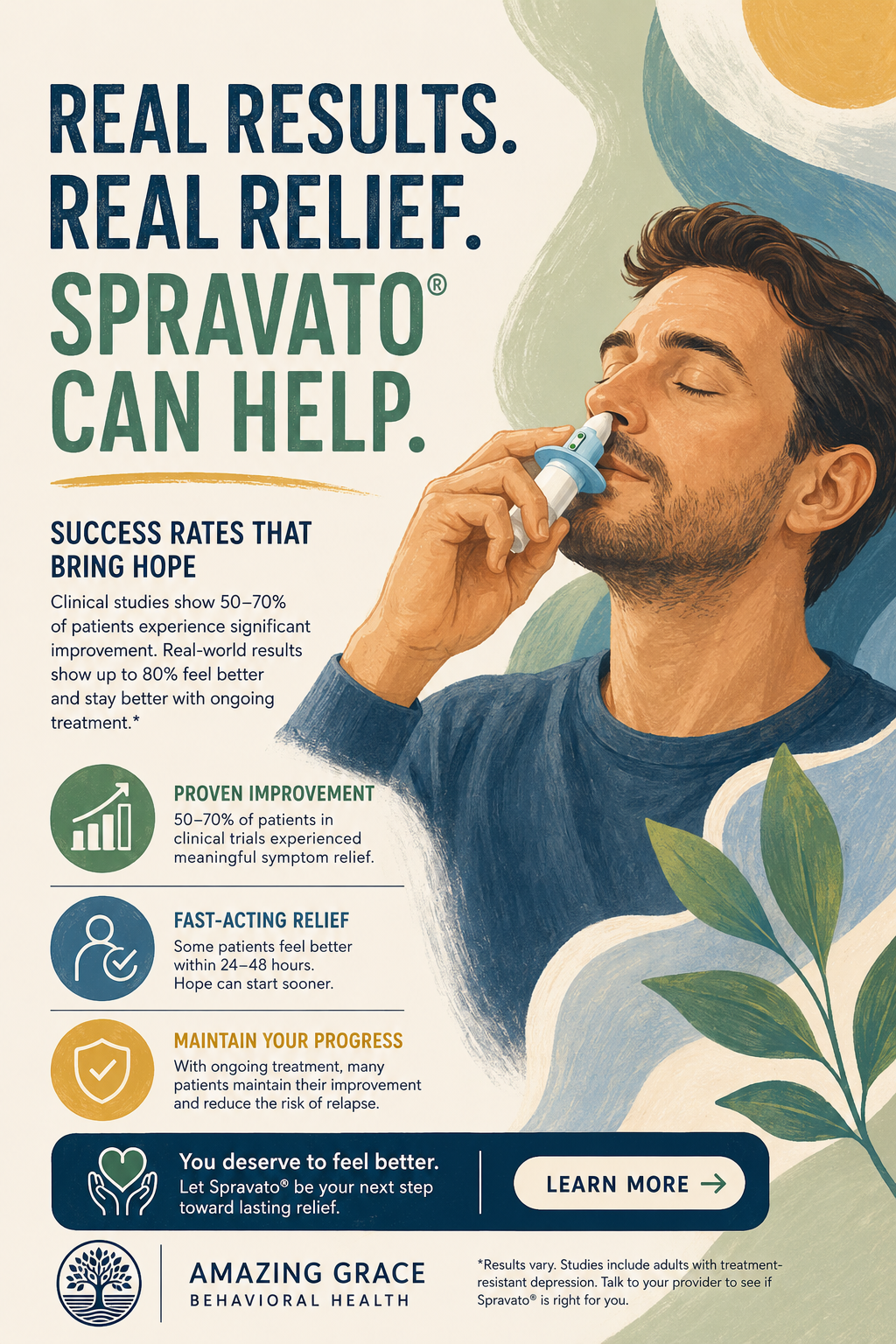
1. Intranasal Esketamine (Spravato)
FDA-approved for treatment-resistant depression
Administered as a nasal spray
Monitored in a clinical setting for 2 hours
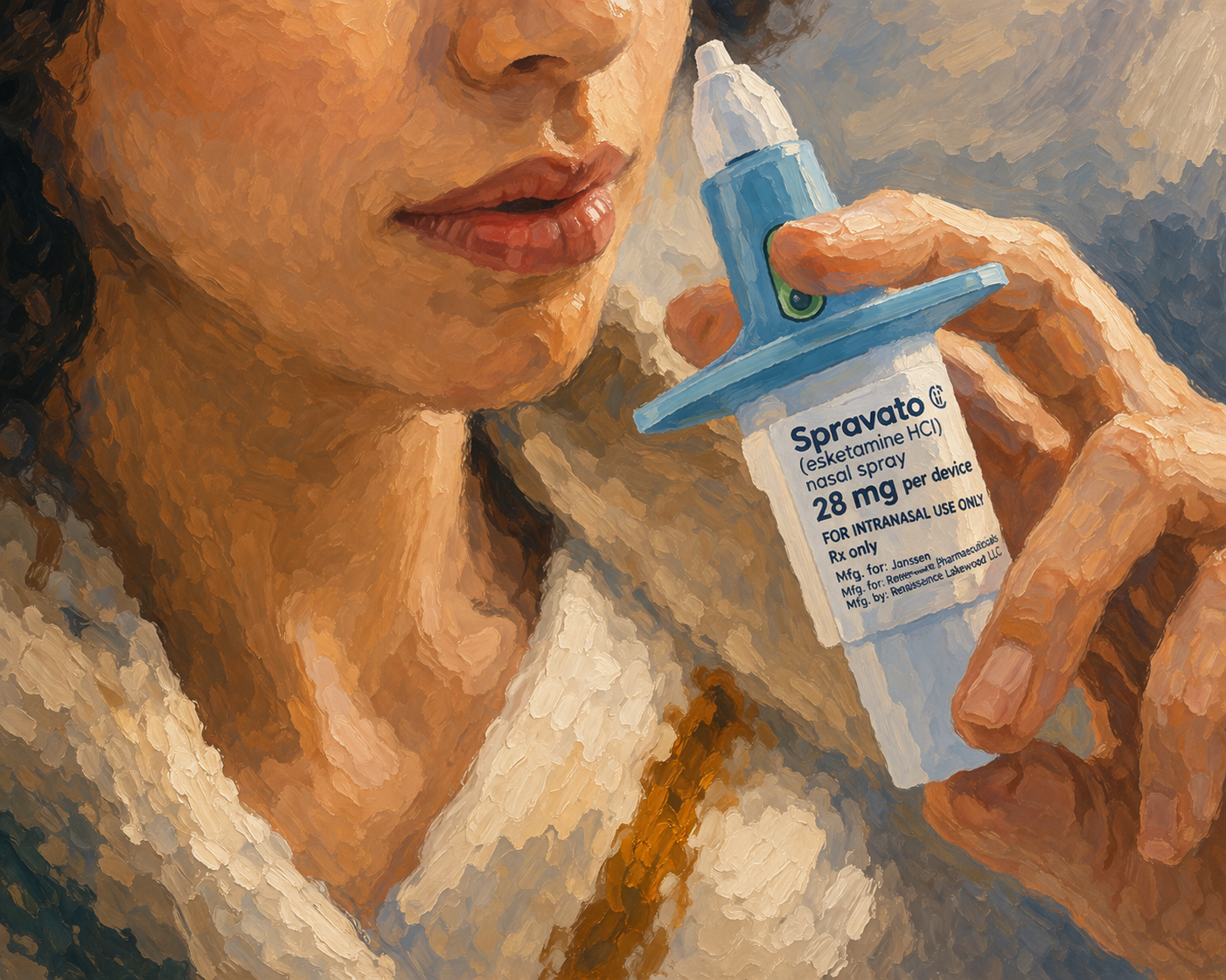
Esketamine (Spravato)
Available at Amazing Grace Center for treatment resistant depression
2. IV Ketamine Infusion
Off-label use for treatment of depression, OCD and PTSD
Delivered through a vein
Allows precise dosing and monitoring
3. Intramuscular Ketamine
Off-label use for treatment of depression, OCD and PTSD
Delivered as a muscular injection
Not approved for home use
4. Sublingual Ketamine
Off-label use for treatment of depression, OCD and PTSD
Delivered under the tongue
Not approved for home use
All options are safe when done under medical supervision and are tailored to your individual needs.
What to Expect During Ketamine Treatment
Ketamine treatment is not a one-time fix, it’s part of a structured plan.
A typical experience includes:
An initial psychiatric evaluation
A series of treatments over several weeks
Monitoring during each session
Follow-up care to maintain progress
During treatment, you may feel relaxed, detached, or reflective. Many people describe it as a temporary “shift” in perspective. After the session, you’ll need someone to drive you home, and most people return to normal activities by the next day.
Ketamine Side Effects and Safety
Ketamine is generally well tolerated when used in a clinical setting, but like any treatment, it can have side effects.
Common side effects include:
Temporary dissociation (feeling disconnected)
Mild increase in blood pressure
Nausea or dizziness
Fatigue after treatment
These effects are usually short-lived and monitored closely by medical staff. Safety is always the priority, especially in a setting that understands both mental health and substance use.
Ketamine Treatment in Portsmouth, Ohio
If you’re searching for ketamine treatment in Portsmouth, Ohio, it’s important to find a provider who understands the full picture of your mental health.
At Amazing Grace Center, we offer:
Comprehensive psychiatric evaluations for depression
Treatment for depression and co-occurring substance use
Ketamine treatment options tailored to your needs
A supportive, judgment-free environment
Evidence-based medical care to target your depression symptoms
Easy appointment scheduling online at: www.amazinggracetreatmentcenter.com/book
If you’re unsure whether ketamine is right for you, starting with an evaluation can help clarify your options.
Taking the Next Step Toward Healing
Living with depression can feel exhausting but it doesn’t have to stay that way.
Ketamine is helping many people experience relief when nothing else has worked. Whether you’re just starting to explore options or have been struggling for years, there is a path forward. You deserve care that listens, adapts, and works with your life, not against it.
Key Takeaways
Depression is increasingly common, and many people don’t respond to traditional medications
Ketamine treatment offers faster depression relief by working on different brain pathways
Ketamine is especially helpful for treatment-resistant depression
Options include IV ketamine infusions and intranasal esketamine
Treatment is safe when done in a monitored clinical setting
In Portsmouth, Ohio, integrated and cutting edge treatment for depression that addresses both mental health and substance use can significantly improve outcomes.
Read more about ketamine: